Ads in ChatGPT are a paid advertising format that OpenAI officially launched in Spain on 24 August 2026 and that shows a sponsored card inside the conversation when an adult user with commercial intent asks for a recommendation. For a restaurant, bar, café or hotel, they are not yet a channel that replaces Google Ads or Meta Ads, but they are a low-risk pilot worth understanding before the channel matures. In this guide we explain what you see, who sees it, what can be advertised, how much it costs to start and how it combines with organic visibility in AI.
What ads in ChatGPT are and how they look
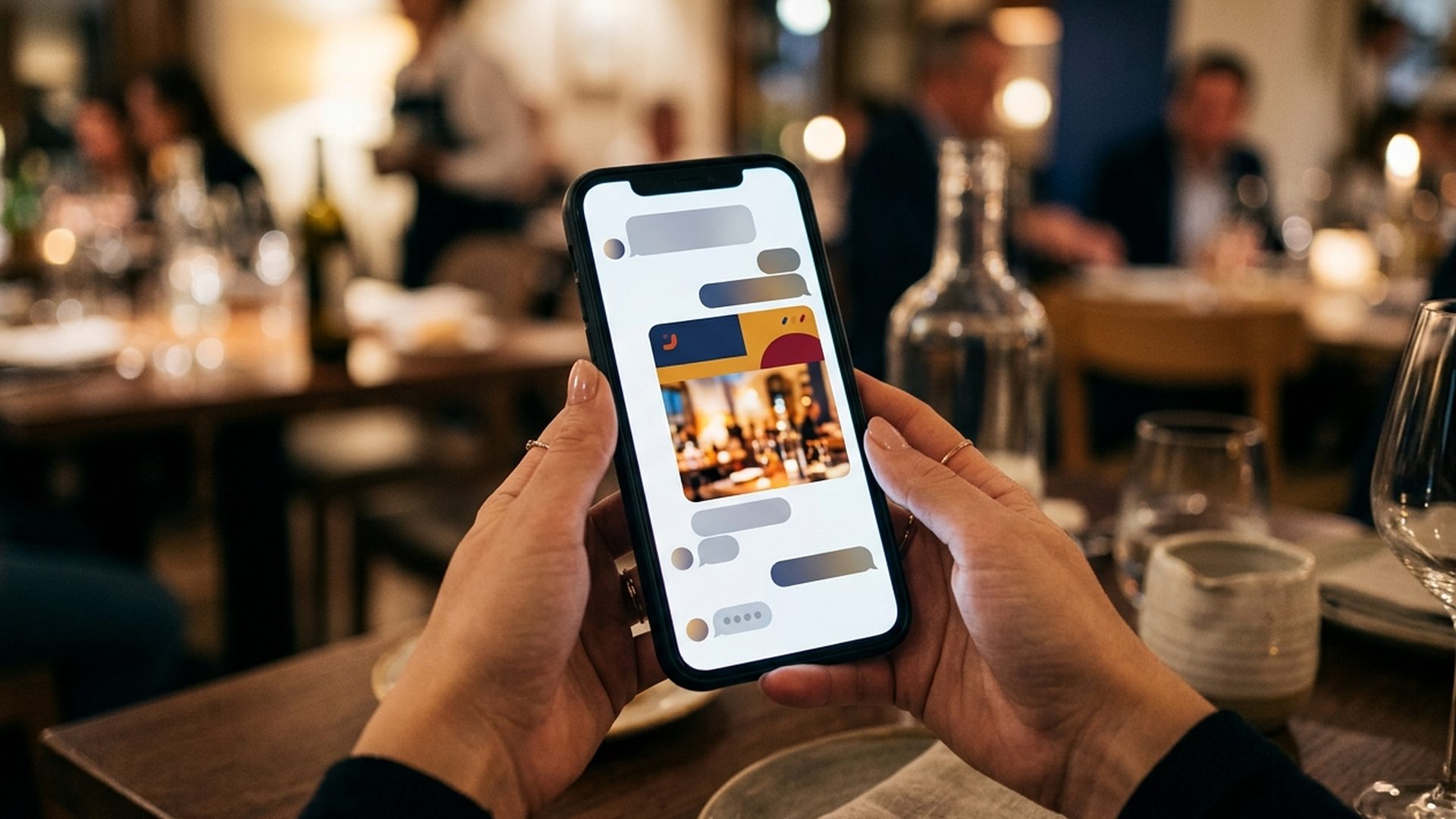
ChatGPT Ads is OpenAI’s paid advertising product. In practice, it is a sponsored card that appears just after ChatGPT’s reply, labelled “sponsored”, and only in conversations where the user shows commercial or local-search intent.
According to the guides published so far, the format includes a title, text, an image and a link. It does not interrupt the reply or replace the organic content: it is shown as an extra result the user can tap or ignore. For example, if someone writes “Italian restaurants for dinner in Valencia tonight”, the generated reply can be followed by a card for a restaurant, a pizzeria or a booking service.
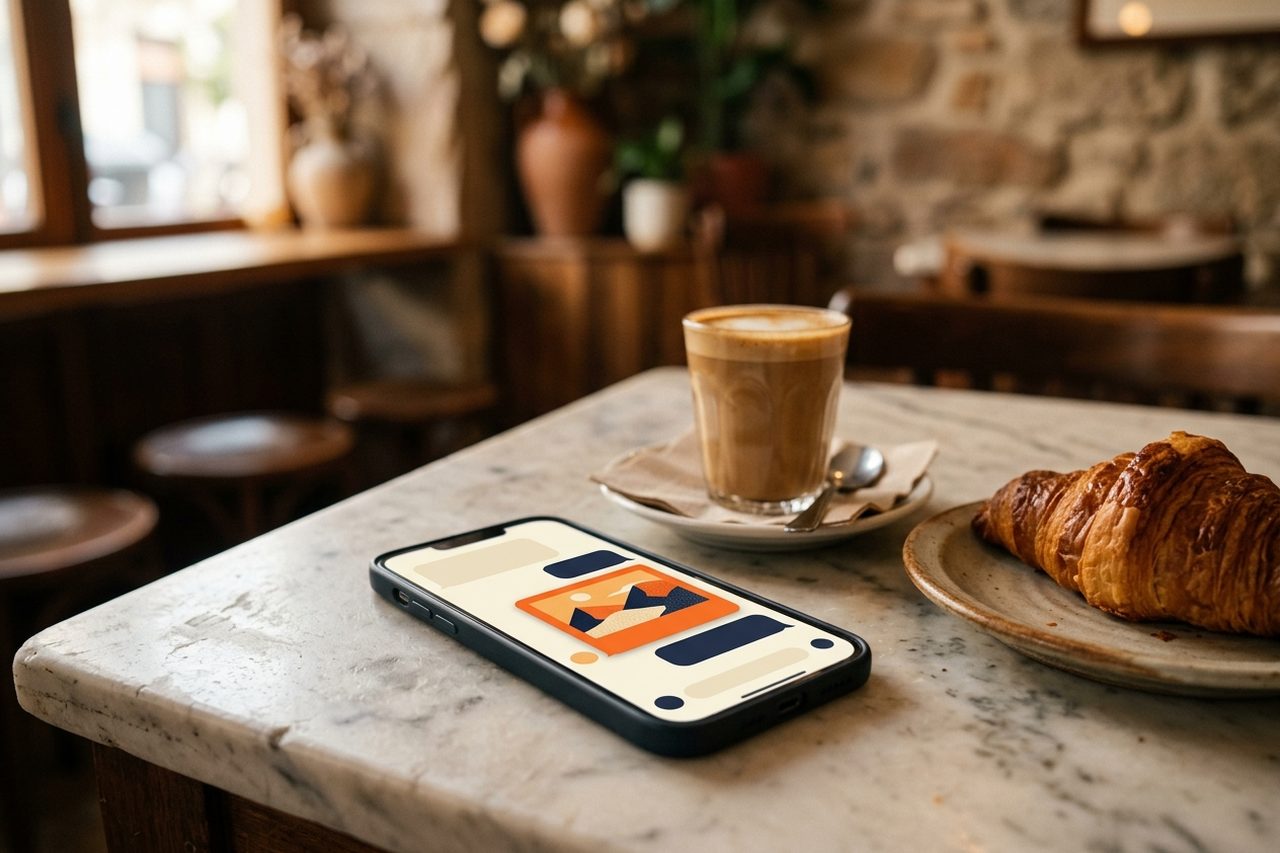
What matters for a hospitality business is that here you pay to appear at the moment of the decision, not to interrupt with a generic message. It is not a side banner or a pre-roll video: it is a module built into the conversation, with a clear ad label. According to OpenAI, only adult users on the Free and Go plans see the ads. People who pay for ChatGPT Plus, Pro, Enterprise or Education do not see ads.
That changes expectations quite a bit: the audience is limited and, by design, the ad only appears when the conversation is already commercial. For a restaurant, that means less volume than an Instagram campaign and, in exchange, a conversation that is already about eating, booking or discovering places. How much that is worth against a social feed still cannot be measured in Spain.
Timeline: from the test in the United States to Spain
ChatGPT Ads is not a leak or an endless pilot project. OpenAI announced the product on 16 January 2026 and began testing it in the United States on 9 February 2026, according to OpenAI’s announcements as reported by the trade press (CNBC, TechCrunch and Digiday) and consulted on 12 September 2026.
In its first months, the barrier to entry was high: in the United States the minimum spend dropped from 250.000 $ in February to 50.000 $ in April, and it was not until 5 May 2026 that the compulsory minimum was removed entirely. That shift matters because it shows a product that went from being reserved for large advertisers to opening up to self-serve in a few weeks.
The jump to Europe came on 24 August 2026. That day, ChatGPT Ads went live in 31 European markets, Spain included, first through OpenAI’s sales team and through agencies. Self-serve opened on 31 August 2026. In other words, when you read this, the product has been operating in Spain for only a few weeks.
According to OpenAI, ChatGPT Ads reached 1.000 million dollars in annualised revenue in fewer than 200 days from launch. It is a global figure, not one for Spanish hospitality, but it helps explain why OpenAI is pushing the product so quickly.
Who sees the ads and who does not
Only adult users on the Free and Go plans see ads in ChatGPT. The paid plans — Plus, Pro, Enterprise and Education — do not show them. It is an OpenAI rule reported by the trade press, not an agency assumption.
For a restaurant, the practical implication is twofold. First, you will not reach everyone who uses ChatGPT: the part of the audience willing to pay for the tool is outside advertising reach. Second, what you do reach is an audience in search-and-decision mode, often with a phone in hand and in a hurry to sort something specific.
Reach should not be confused with noise. An ad in ChatGPT does not compete for attention with dozens of posts in a feed. It competes with the AI’s own reply and with a handful of sponsored cards. In a sector such as hospitality, where a local recommendation arrives with obvious intent, that can be worth more than a thousand poorly targeted impressions.
What a hospitality business can advertise and what it cannot
According to the guides published so far, the categories allowed in ChatGPT Ads include consumer goods, lifestyle, home, local services, travel and experiences, digital products and education. Restaurants, cafés, workshops, caterers, hotels and food shops fit there: you sell a local experience, not a financial product or a healthcare service.
The prohibited categories are dating and sexual content, health and healthcare, alcohol and tobacco, finance and legal, gambling and politics. The one that affects Spanish hospitality most is alcohol. A bar, a wine shop, a brewery or a restaurant with a strong wine list cannot advertise alcoholic drinks inside ChatGPT Ads.
The answer is not to force the category. You can advertise the venue, the cooking, the terrace, the non-alcoholic menu, breakfasts, brunch, food events or the overall experience. You cannot use “the best gin-and-tonic bar in Madrid” as a headline. This limit is consistent with OpenAI’s policies and it is worth taking seriously before you open the account.

How to advertise on ChatGPT step by step from Spain
Advertising on ChatGPT Ads is not as immediate as creating a campaign on Instagram, but it does not require advanced technical knowledge either. The logical path for a Spanish restaurant is to open the account in the business’s name, with its tax details, and then decide whether you manage it or an agency does.
Step 1: open the account in Ads Manager with the business details
Access is at ads.openai.com. The account should be in the company’s name, not in the name of an individual who later leaves or changes jobs. This is key: the advertising account is a business asset, like the Google listing or the web domain.
Step 2: verify the company
OpenAI asks for business verification. According to the guides published so far, it is done inside Ads Manager itself with tax documentation. According to those same guides, campaigns do not go live without verification. It is not an endless procedure, but it is worth having the CIF, the tax details and proof of ownership to hand.
Step 3: add the agency as a guest manager, not as the owner
There is an important difference here with Google Ads. According to the guides published so far, there is no multi-account manager like Google’s. The agency is added as a guest manager on your account. That is why we insist that the business opens the account: if the agency opens it with its own details, the client loses control.
Step 4: set a small budget and a test campaign
You do not need to replicate your Google Ads budget. The product is so recent in Spain that the prudent move is to start with a low daily budget, enough to collect data without taking on risk. We will talk figures in the next section.
Step 5: prepare the creatives, the link and the measurement
The ad needs a title, text, an image and a destination URL. The URL matters: if you are advertising a tasting menu, do not send the click to the generic home page. Point it at a specific page or at least at a well-optimised website. Also check the payment gateway if you sell advance bookings, vouchers or cakes to order: a paid click that ends in a payment that fails is money lost.
How much it costs to advertise on ChatGPT
According to the guides published so far, in Europe buying works by auction with CPM, CPC or conversion-optimisation options. There is no official flat rate published by OpenAI.
What the specialist guides do repeat is that there is no compulsory minimum spend, that a daily budget can be set from around 15 € and that there are campaigns from 1 €. These are indicative figures from third-party guides, not a contractual commitment from OpenAI. In Spain there are still no reliable benchmarks for cost per click or cost per conversion in hospitality.
US blogs circulate CPM figures of 25 to 60 $ and CPC figures of 3 to 5 $. They are numbers from the United States market, not official OpenAI data and, certainly, not applicable to the Spanish market. If someone sells you a ChatGPT Ads campaign in Spain promising a specific CPC, be wary.
In short: you can start with little money, but you cannot start with false expectations. The European auction has been open for only a few weeks. That it is lightly saturated is a reasonable hypothesis, not a verified fact. The cost per interaction may be low today; it may also change in two months. At this point, experimenting with a small budget is more honest than a promise of guaranteed profitability.
Ads in ChatGPT against organic GEO and against Google Ads and Meta Ads
Before drawing conclusions, it is worth separating three channels that often get mixed together: advertising on ChatGPT, organic visibility in AI, and advertising on search engines or social networks.
Advertising on ChatGPT is paid. You appear in a sponsored card when the algorithm decides there is commercial intent. GEO, by contrast, is organic visibility: working your restaurant’s presence so that ChatGPT, Perplexity or Google’s AI Overviews mention you in their replies without you paying per click. They are not the same thing and, in fact, they complement each other. You can read more about this work on our GEO for restaurants page.
Google Ads is the channel with the longest track record and the most measurement tools for capturing demand in local search. Meta Ads is stronger at creating desire with image and video. ChatGPT Ads plays in a middle zone: it captures an active conversation with a contextual card, with no browsing history and no personalised audiences.
| Channel | What you pay for | Intent | Advantage for hospitality | Main limitation |
|---|---|---|---|---|
| ChatGPT Ads | Sponsored card in the conversation | High, contextual | A local recommendation at the moment of the decision | Audience limited to the Free and Go plans; a very recent product |
| Organic GEO | Optimisation and content service | High, recommendation | Appearing in the reply without paying per click | It is not immediate: it needs work on mentions, structured data and authority |
| Google Ads | Click or conversion in search | High, transactional | Capturing someone who is already searching for “restaurant in…” | Established competition; cost per click depends on the area and on ad quality |
| Meta Ads | CPM or conversion in feed and stories | Medium, aspirational | Visual reach and interest targeting | A lot of advertising noise and less immediate intent |
None of the four is magic. A restaurant with a website that does not load well on a phone will keep losing clicks wherever they come from. The base is still a clear page, an up-to-date Google listing and a booking or payment flow with no friction.
Our honest recommendation for 2026
Our recommendation is the one we would give a long-standing client: do not put your main advertising budget into ChatGPT Ads, but do not ignore it. The moment to test is now, with little money, an account in the business’s name, simple creatives and a quarterly review.
If you already invest in Google Ads and Meta Ads, the reasonable move is to bring ChatGPT Ads in as a low-risk pilot. In our paid advertising plans for hospitality, the ChatGPT Ads pilot is included in the Ads Full + AI plan, alongside Google and Meta. It is not a service we recommend on its own today: it makes more sense as a complement to a strategy that already works.
It is also worth being clear: if you are not working your organic presence on Google or your business listing properly, an ad in ChatGPT will not fix it. The ad captures clicks; the website converts; the local listing builds trust; the organic content builds the recommendation. If the rest fails, the sponsored card only speeds up the failure.
Before you jump in, check three things: your website and the mobile experience, your web design for restaurants and your Google Business listing. If those foundations are in order, a ChatGPT Ads pilot can give you useful information. If they are not, it is better to invest first in what can already be measured with more certainty.
In any case, the advice comes down to one sentence: your account, a small budget, honest creative, a quarterly review and zero promises of immediate profitability. The channel has only just opened in Spain and the conditions can change in weeks.
If you want to talk to us with no pressure, whether about paid advertising or about improving your organic visibility in AI, you can write to us from the contact page. You can also see our fixed-price packs or read more about our agency and its method.
Frequently asked questions
What do ads in ChatGPT look like?
They are sponsored cards that appear after ChatGPT’s reply, labelled “sponsored”. They include a title, text, an image and a link. They are only shown in conversations with commercial or local-search intent, and users on paid plans do not see them.
How do you run ads in ChatGPT from Spain?
Open an account in Ads Manager with the business’s tax details, verify the company, add the agency as a guest manager and launch a campaign with a small budget. Public access to self-serve opened in Spain on 31 August 2026.
How much does it cost to advertise on ChatGPT?
According to the guides published so far, there is no compulsory minimum spend, there is a daily budget from around 15 € and campaigns from 1 €. These are indicative third-party figures, not official OpenAI figures. There are still no reliable hospitality benchmarks in Spain.
Who sees ChatGPT ads?
Only adult users on the Free and Go plans. Paid subscribers — Plus, Pro, Enterprise and Education — do not see ads. The audience is limited, but the ad is only shown in conversations with commercial intent, according to the guides published so far.
Can a restaurant or a bar advertise on ChatGPT?
Yes. Hospitality businesses can advertise local services and experiences, with the exception of alcohol. A bar or a wine shop can advertise the venue, the cooking, the terrace or an event, but not alcoholic drinks. Health, gambling, politics and adult content are not allowed either.
Can an agency manage my ads on ChatGPT?
Yes. According to the guides published so far, the agency is added as a guest manager on the business’s account. That is why it is worth opening the account with the restaurant’s tax details and not handing over ownership. There is no multi-account manager identical to Google Ads.
Is it better to advertise on ChatGPT or to appear organically (GEO)?
They are not mutually exclusive. GEO consists of appearing in the replies without paying per click, by working on content, structured data and mentions. Advertising on ChatGPT gives you a presence in sponsored cards. The logical approach for a restaurant is to combine both when the foundations are sound.
How do you remove ads from ChatGPT?
In one sentence: the paid plans do not show them. If you use ChatGPT Plus, Pro, Enterprise or Education, you will not see ads. On Free and Go there is no option to turn them off: it is an OpenAI decision, not a user setting.