SEO for coffee shops: the 2026 pillar guide to ranking
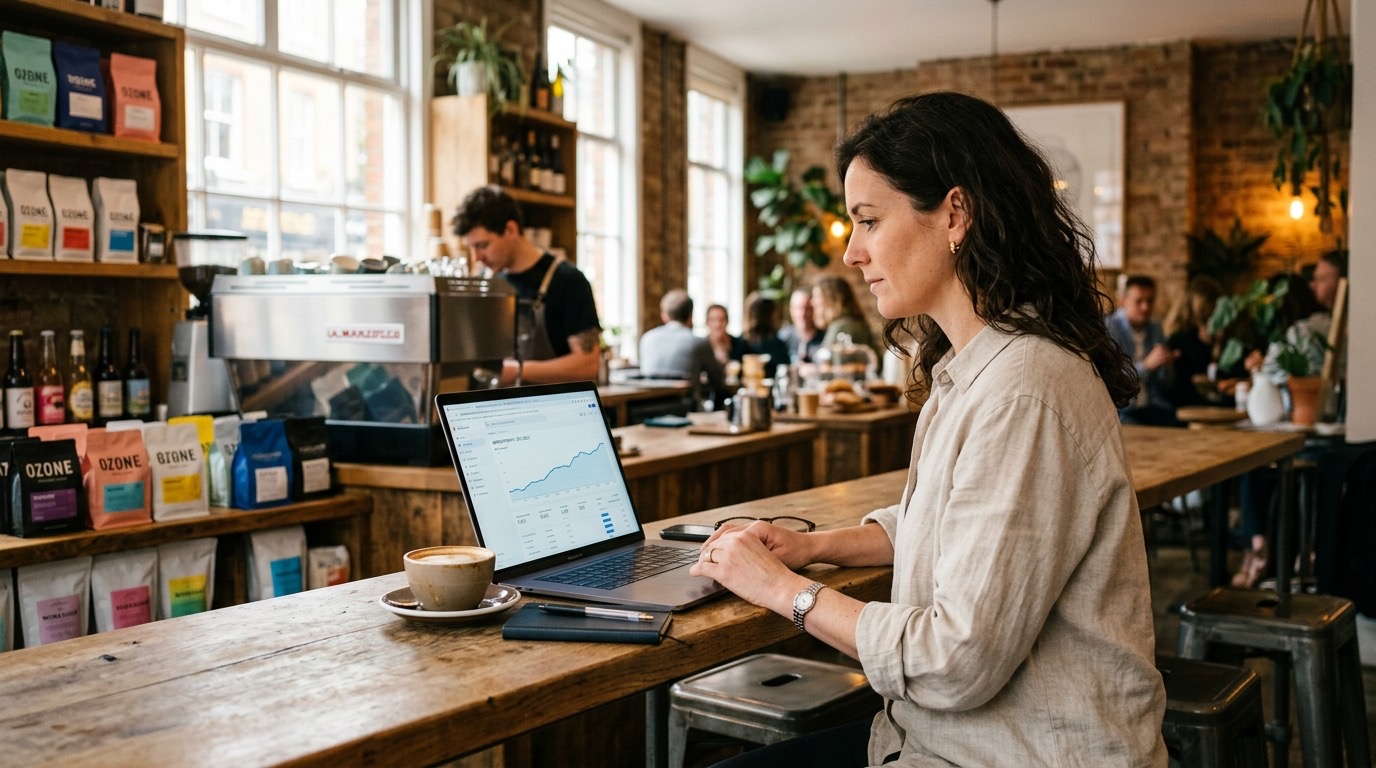
In a market as competitive as coffee shops, standing out is not only a matter of having the best coffee or the most welcoming room. In 2026, online visibility is the secret ingredient for attracting new customers and keeping regulars. This GastroSEO pillar guide takes you through the most effective SEO ranking strategies, from local SEO to artificial intelligence, so your coffee shop does not only survive, but thrives in the digital environment. Get ready to transform your online presence and fill the room every day.
What SEO for coffee shops is, and why it is crucial in 2026
SEO for coffee shops is the set of techniques and strategies aimed at improving your business’s visibility in search engines, especially Google. It is not only about appearing. It is about appearing at the right moment and in the right place, when a potential customer searches for 'coffee shop near me' or 'brunch in [your neighbourhood]'. In 2026, with the growing dependence on mobile devices and voice search, having a robust SEO strategy is as vital as the quality of your espresso.
Unlike other online businesses, SEO for coffee shops has a strong geographic component. Your main aim is to attract customers who are physically near your venue, or who plan to visit your area. That means optimising your Google Business Profile, working on local keywords and making sure your contact information is consistent across every platform. Good SEO can be the difference between a full room and one with empty tables.
Key differences between SEO for coffee shops and general restaurant SEO
They share many foundations, but SEO for coffee shops has its own particulars. While a restaurant may focus on dinner bookings, a coffee shop prioritises footfall, spontaneous visits and takeaway. The keywords differ: 'speciality coffee', 'vegan breakfast', 'a place to work on a laptop' matter more for a coffee shop than 'Michelin-star restaurant' or 'tasting menu'.
The customer’s decision cycle is also shorter in a coffee shop. The purchase decision is made quickly and people want immediacy. That means hours, location and product availability have to be instantly accessible and accurate. Mobile optimisation and load speed are even more critical, because many users search for 'coffee shop open now' while they are walking down the street.
The three layers of SEO for coffee shops: local, hyperlocal and GEO for AI
For a coffee shop, SEO is organised in three connected levels. Local SEO is the base, making sure you appear in geolocated searches such as 'coffee shop in Madrid'. Hyperlocal SEO goes one step further, focusing on specific neighbourhoods or micro-areas, for example 'brunch in Malasaña' or 'speciality coffee in the Eixample'. The aim is to capture the customer who is a few metres from your door.
The third layer, and the most innovative for 2026, is GEO for AI. It means optimising your online presence so that voice assistants such as Siri or Alexa, or generative AI platforms such as ChatGPT or Perplexity, can recommend your coffee shop in a relevant way. That implies not only structured data, but also a coherent and attractive story about your business that the AI can interpret and present to users. It is the future of local business recommendation.
Google Business Profile (GBP): the digital shop window of your coffee shop
Your Google Business Profile (formerly Google My Business) is, without doubt, the most powerful SEO tool for any coffee shop. It is your calling card on Google Maps and in local search results. Make sure your name, address and phone (NAP) are exact and consistent. The primary category should be 'Café', 'Coffee shop' or 'Bakery' if you offer artisan pastry, choosing the one that best represents your main business.
Optimising your GBP means filling every section in detail: hours, services, attributes (Wi-Fi, terrace, wheelchair access), high-quality photos and an attractive description. Publish updates regularly about offers, events or new products. A complete, active GBP profile significantly improves your visibility in Google’s 'local pack'.
NAP and citations: consistency is the key to Google’s trust
NAP stands for Name, Address and Phone. It is fundamental that these details are identical on every online platform where your coffee shop appears: your website, Google Business Profile, local directories, social networks, and so on. Any inconsistency can confuse Google and hurt your local ranking.
'Citations' are mentions of your business on other websites, even if they do not include a link. Directories such as Páginas Amarillas, Yelp, TripAdvisor or even local blogs are valuable citation sources. The more consistent citations you have, the more Google trusts that your information is true, which translates into a better local ranking. Tools such as Semrush or Ahrefs can help you audit your existing citations.
The best secondary categories to widen your visibility
Besides your primary category on Google Business Profile, you can add secondary categories to describe your business better and capture more specific searches. If your coffee shop offers brunch, add 'Breakfast restaurant'. If you have a wide selection of cakes, 'Pastry shop' or 'Bakery'. If speciality coffee is your strength, consider 'Coffee roaster' if you also roast on site, or 'Coffee store' if you sell beans.
Think about the extra services you offer and how your customers would search for them. For example, if you have a space for remote work, 'Coworking space' could be relevant. Choosing the right secondary categories widens your reach and lets you appear in search results that your primary category would not be enough for.
Photos that convert in coffee shops: from the gallery to the cup
Images are the first visual contact with your coffee shop. On Google Business Profile, your website and social networks, high-quality photos are essential. Show your coffee, your brunch plates, the atmosphere of the room, the terrace if you have one and, of course, your team. User photos are also very valuable, so encourage your customers to upload them.
The key is that the photos are attractive, well lit and that they reflect the essence of your brand. A picture of perfect latte art, a plate of avocado toast or a cosy corner of your room can be the trigger that makes a customer choose your coffee shop. Make sure the photos are geolocated and optimised for the web in size and format.
Reviews and replies: building reputation and trust
Online reviews are digital word of mouth. A high number of positive reviews and a good average score are crucial for local SEO and for how customers decide. Encourage satisfied customers to leave a review on Google, TripAdvisor or Facebook. You can do it with signs in the venue, on the receipt or through a post-visit email.
Just as important is replying to every review, positive and negative. Thank people for the praise and address criticism in a professional, constructive way. Show that you care about the customer’s experience. A well-handled reply to a negative review can turn a bad experience into a chance to improve your image. This interaction is a ranking factor for Google.
Coffee-shop keywords: capturing local search intent
Keyword research is fundamental. Think like your customer. What would they search for? 'Coffee shop near me', 'coffee shop [neighbourhood name]', 'brunch in [neighbourhood name]', 'speciality coffee in [city]', 'coffee shop with wifi', 'vegan breakfast'. Use tools such as Google Keyword Planner, Semrush or Ahrefs to discover search volume and competition. Do not forget geographic variations and synonyms.
Work these keywords in naturally on your website (titles, descriptions, content), on your Google Business Profile and in your posts. For example, if your coffee shop is called 'El Rincón del Café' in the Gracia neighbourhood of Barcelona, your title could be 'El Rincón del Café – Speciality coffee shop in Gracia, Barcelona'.
Hyperlocal long-tail: the power of specific searches
Long-tail keywords are more specific phrases and, often, less competed, but with a very clear search intent. Combined with a hyperlocal focus, they are a goldmine. Examples: 'coffee shop with a dog-friendly terrace in Lavapiés', 'best gluten-free brunch in the centre of Valencia', 'coffee to take away near Atocha station'.
These searches, even if each one has less volume on its own, add up to very qualified traffic. Someone searching for 'coffee shop with sockets for remote work in the Eixample' is one step from becoming a customer. Create content on your website or GBP posts that answer these specific searches directly, highlighting what is particular about you and your services.
Content for coffee shops: beyond the menu
A blog or a news section on your website can be a powerful SEO tool. Publish articles that are relevant to your audience. For example, 'A guide to the best areas for remote work in [your city]', 'The history of speciality coffee in Spain', 'Brunch recipes to make at home (with our products)'. This positions you as an authority and attracts organic traffic.
You can also create guides to your area, highlighting other local businesses or points of interest. For example, 'A cultural walk through [your neighbourhood] and where to get the best coffee'. This kind of content is useful for users, and it also generates internal and external links, and helps you rank for searches related to your location. A GastroSEO Plan at 350€/mes can include the creation of this kind of strategic content.
Web design for coffee shops: speed, visuals and function
Your website is the hub of your online presence. It has to be fast (load speed), responsive (adapted to mobile) and visually attractive. Large, high-quality photos of your products and your room are essential. A visual menu, easy to browse and kept up to date, is much more effective than a downloadable PDF. Include your hours, address and an interactive map clearly.
User experience (UX) is a direct SEO factor. If your site is slow or hard to use, visitors leave, your bounce rate rises and your ranking suffers. Make sure key information, such as opening hours and location, is visible immediately. The technical optimisation of your website matters as much as the content.
Schema markup: the language of search engines
Schema markup is structured code you add to your website to help search engines understand the content of your page. For a coffee shop, it is vital to implement Schema.org/LocalBusiness and Schema.org/FoodEstablishment. This lets Google show 'rich snippets' in search results, such as your opening hours, your review score or your price range.
When you implement Schema correctly, you are giving Google precise information about your type of business, your products and your services. This does not only improve your visibility. It also raises the chances that your coffee shop is featured in special results, such as the 'Knowledge Panel' or Google Assistant recommendations.
Footfall versus in-app ordering: adapting your strategy
Coffee shops have traditionally depended on footfall. Integration with delivery apps or advance-order apps (such as Glovo, Uber Eats or your own app) is gaining ground, though. Your SEO strategy should consider both. Optimise for searches that imply a physical visit ('coffee shop with a terrace') and for those that look for convenience ('coffee to take away nearby').
Make sure your profiles on these apps are optimised with attractive photos and descriptions, and that the links to your website or your GBP are consistent. If you offer the option to order and pay through your own app, promote that function on your website and in the venue. This diversifies your sources of income and improves the customer’s experience.
Competing with the big chains: Starbucks, Santagloria and more
Competing with giants such as Starbucks or Santagloria can look daunting, but your neighbourhood coffee shop has unique advantages. Chains usually have very generic, less personal SEO. Your strategy should focus on hyperlocal ranking, specialisation and a connection with the community. Highlight your origin coffee, your artisan pastry, your unique atmosphere or your personal service.
Use long-tail keywords that chains do not usually go after, such as 'coffee shop with a play area for children in [neighbourhood]' or 'Colombian speciality coffee in [city]'. Encourage positive reviews that mention what makes you different and the quality of your products. Your authenticity and your unique value proposition are your strongest weapons against the mass marketing of big brands.
Voice search: the future of 'near me' searches
Voice search is on the rise thanks to assistants such as Siri, Alexa or Google Assistant. People do not speak the way they type. Voice searches tend to be more conversational and phrased as questions: 'Where is there a coffee shop open now near me?', 'Which is the best coffee shop for breakfast in this neighbourhood?', 'Which coffee shops have free wifi?'.
To optimise for voice search, your content should answer these questions directly. Use natural language on your website and on your GBP. Make sure your hours, address and services are perfectly clear and structured with schema markup. Precision and brevity are the key to the AI choosing your business as the answer.
GEO for AI: how your coffee shop can be recommended by ChatGPT and Perplexity
GEO for AI is the evolution of local SEO. It is not only about appearing in Google’s results. It is about being the main recommendation when a user asks a generative AI, such as ChatGPT or Perplexity, for a place to have coffee. These AIs pull information from multiple sources, including Google Business Profile, reviews, websites and knowledge bases.
To be recommended, you need an impeccable, consistent online presence. A complete GBP profile, many positive reviews, structured data on your website, relevant content and a good online reputation are essential. The AI looks for reliability and authority. If your coffee shop is a reliable, well-regarded source of information, the AI is more likely to suggest you to its users. A plan such as GEO Growth at 590€/mes is designed for this new reality.
The metrics and KPIs that measure whether your SEO is working
To know whether your SEO strategy is working, you need to measure. Some essential KPIs include: visits to your Google Business Profile, phone calls from the GBP, direction requests, clicks to your website, impressions in the local pack, ranking for specific keywords, organic traffic to your website, conversion rate (visits to customers) and, of course, the number and quality of your reviews.
Use Google Analytics for your website and Google Search Console to monitor your search performance. Google Business Profile 'Insights' will give you direct data on how users interact with your listing. A regular review lets you adjust the strategy and focus your effort. The investment in SEO, such as a GastroSEO Plan, has to be measurable and profitable.
SEO plans and prices for coffee shops: invest in your future
Investing in SEO is investing in the sustainable growth of your coffee shop. We offer different plans adapted to what you need. Our Local SEO Audit Pro, at 290€ (100% credited if you hire a plan), gives you a thorough analysis of your current situation and a roadmap of actions. It is the ideal starting point for any business that wants to improve its visibility.
For ongoing management and long-term results, our GastroSEO Plan at 350€/mes (no lock-in) covers GBP optimisation, keyword research, review care and basic content. If you want a more intensive focus on your Google Business Profile, GBP Pro at 650€/mes is the right fit. And for the leading edge of ranking in AI, the GEO Growth plan, at 590€/mes, prepares you for the future of search and recommendations.
Real use cases and the typical mistakes that kill a coffee shop on Google
An illustrative example is 'Café del Sol', a fictional coffee shop in Sevilla which, after putting a GastroSEO Plan in place, saw direction requests and calls grow in 6 months. The key was GBP optimisation with high-quality photos, consistent replies to reviews and a blog with 'Coffee walks in Triana'.
On the other side, common mistakes that kill a coffee shop on Google include: not having a Google Business Profile, inconsistent NAP information, ignoring reviews (especially the negative ones), having a slow website or one that is not adapted to mobile, not using local keywords and, the most serious, thinking that SEO is something you do once and then forget. SEO is a continuous, dynamic process.
Now that you know the keys to SEO for coffee shops in 2026, it is time to act. Do not let exceptional coffee go unnoticed in the vast digital world. If you want a detailed, personal analysis for your business, our Local SEO Audit Pro at 290€ (100% credited) is the first step. Or if you prefer full, steady management to secure your growth, our GastroSEO Plan at 350€/mes with no lock-in gives you the calm and the results you need.
Frequently asked questions
How long it takes for a new coffee shop to rank on Google Maps
The time it takes to rank a new coffee shop on Google Maps varies, but significant results generally start to show in 3 to 6 months. The key is consistency and ongoing optimisation of the Google Business Profile, review collection and NAP consistency. An initial investment in a Local SEO Audit Pro at 290€ can speed this process up by identifying the priority actions from the start.
Which Google Business Profile category suits a speciality coffee shop best?
For a speciality coffee shop, the most suitable primary category on Google Business Profile is 'Café' or 'Coffee shop'. It is crucial, though, to add secondary categories such as 'Coffee store' if you sell beans, or 'Coffee roaster' if you roast on site, so you capture more specific searches. If you offer artisan pastry, 'Bakery' or 'Pastry shop' can also be relevant.
Is it better to pay for ads or invest in SEO for a coffee shop
The two strategies complement each other, but they have different aims. Ads (Google Ads) offer immediate results, but they stop working when you stop paying. SEO is a long-term investment that builds organic, sustainable visibility, generating qualified traffic at no cost per click once you are ranked. For a coffee shop, local SEO is fundamental for footfall. A GastroSEO Plan at 350€/mes builds that solid base for the future.
How do I compete with Starbucks with my neighbourhood coffee shop?
To compete with Starbucks, focus on your unique value: the quality of your speciality coffee, the personal service, the welcoming atmosphere and your connection with the local community. Use hyperlocal SEO to capture customers in your neighbourhood and highlight your differentiating attributes on your Google Business Profile and on your website. Chains cannot replicate the authenticity and the charm of a local business.
How much well-done monthly SEO costs for a coffee shop
The cost of well-done monthly SEO for a coffee shop can vary with the depth of the service. A basic plan for managing and optimising Google Business Profile can sit around 200-300€/mes. For a more complete strategy, including content, review care and website optimisation, the GastroSEO Plan at 350€/mes is a robust option. If you want an advanced approach for GEO and ranking in AI, plans can go up to 590€/mes or more.
What is GEO, and is it useful for a coffee shop in 2026?
GEO for AI is the optimisation of your online presence so that generative artificial intelligences (such as ChatGPT or Perplexity) recommend your coffee shop to users. Yes, it is crucial for 2026, because conversational search and AI recommendations are on the rise. A plan such as GEO Growth at 590€/mes helps you structure your information and your online story so you are the preferred option of these intelligent assistants.