Rural house web design: direct sales for your stay
Rural house web design with your own booking engine, local SEO and season management. From 890 € and delivered in 2–4 weeks. A quote with no obligation.
The real challenge of rural house web design: direct sales for your stay
A website for a rural house is the owner's direct channel: your own booking engine, local SEO and a design built to sell the setting, not only the beds. At GastroSEO projects start at 890 € and are delivered in 2–4 weeks. It is built for owners of rural houses and rural tourism stays who want bookings without depending only on portals.
What you get
Your own calendar and booking engine to capture direct bookings with no intermediary.
A design centred on photography and the story of the rural setting, to improve conversion.
Local SEO so you appear for searches of "rural house + district or village".
A multi-language structure for international markets without doubling the admin.
Lodging structured data and an integrated Google Business Profile.
A self-serve panel to manage availability, seasons, prices and minimum stays.
How we work
The same method on every hospitality project. Clear milestones and a deliverable at each stage.
We define the stays, the seasons, the markets and which bookings you want to prioritise.
We work on structure, photography, the story of the setting and copy aimed at booking.
We set up the calendar, booking engine, languages, local SEO and the Google Business Profile.
We publish, check performance and leave the panel ready for you to manage the site.
Who this service is for
Why your rural house needs its own website, not only a profile on booking portals
A website of your own is the only channel where you control the brand, the prices and the relationship with the guest. Being on portals such as Booking, Airbnb or rural platforms such as Toprural gives you visibility, but it does not replace a page that works for you and allows a direct booking with no intermediary. The site complements the portal: it turns searches for "rural house + district" into first-hand contacts and stops the guest associating the stay only with the platform.
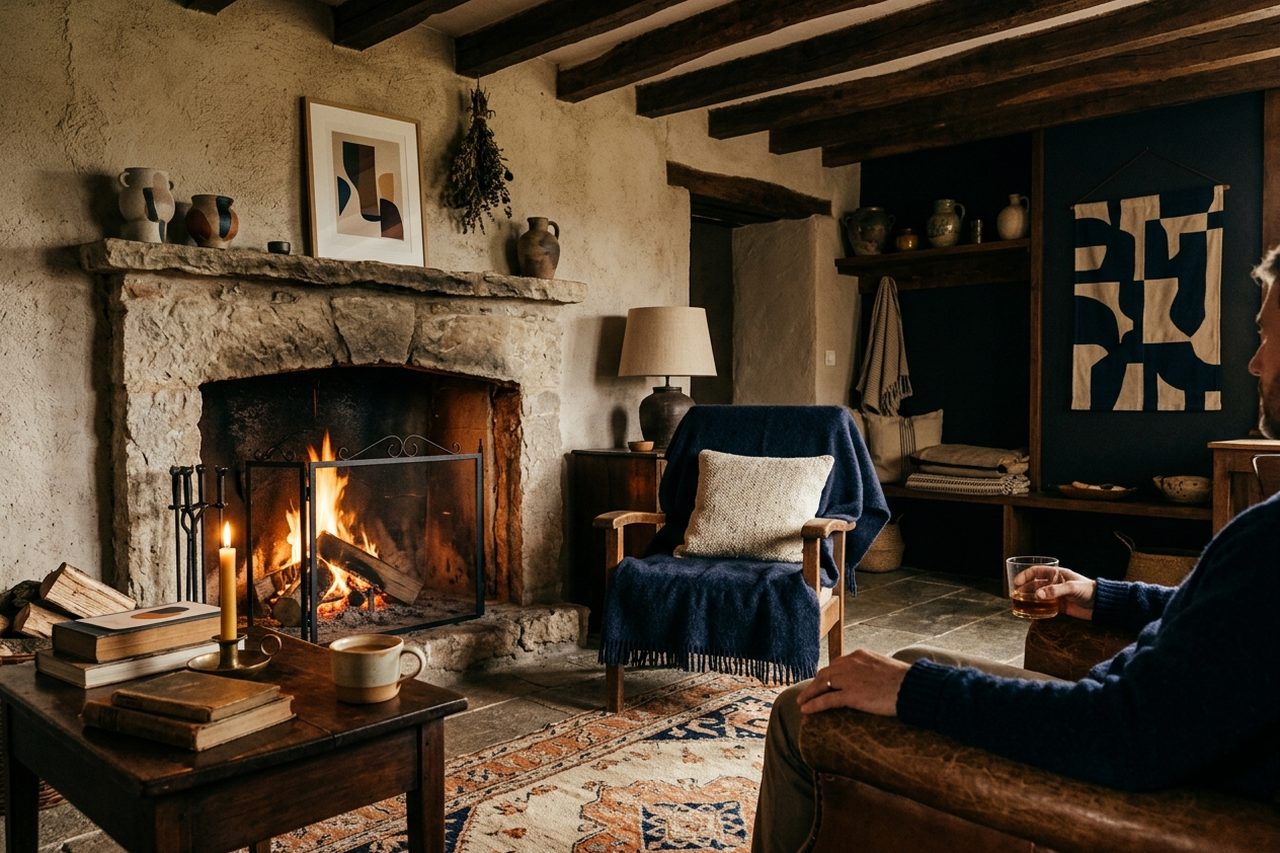
It is also the place where you can explain what the portal does not: the path that starts at the door, the fireplace in winter, the quiet of the estate or a winery nearby. That story of the setting is what justifies the price and improves conversion. Portals such as Toprural, whose name has changed over time, or Escapada Rural are useful as a shop window; your own website is the asset you control.
What a rural house website must have to turn visits into bookings
A rural house website should combine an up-to-date calendar, a gallery of the stay and the setting, a visible tourism registration and a clear booking process from a phone. A pretty template is not enough: the owner needs to be able to change availability, prices and seasonal offers without depending on a developer. The essential elements are practical, not decorative.
- An availability calendar with minimum stays and high or low season.
- A booking engine or a request form with immediate confirmation.
- A photo gallery by room, exterior and natural setting.
- A page of nearby activities, routes and experiences in the district.
- A map, coordinates and an explanation of how to get there, including the last rural stretch.
- The tourism registration number, or a mention of the autonomous community's rules.
- Legal notice, privacy, cookies and a clear cancellation policy.
- A multi-language version if the area receives foreign visitors.
An example of a home page that converts
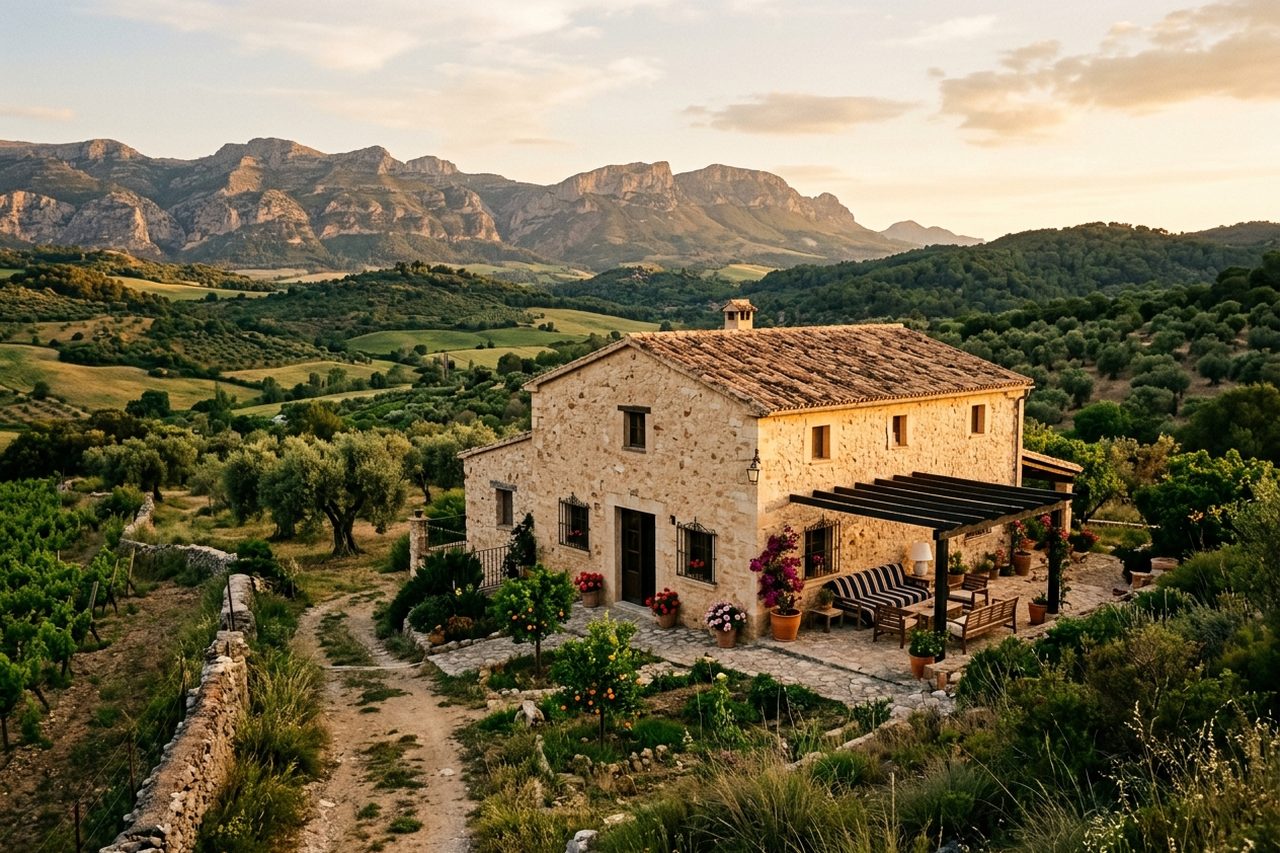
A stone facade at dusk, a headline with the district and the real capacity, an availability calendar visible on the first scroll and a "Book now" call to action that leads to the engine without friction. The description sells the plan of the trip, not only the beds.
Your own booking engine versus commission platforms: a comparison
The key difference between your own booking engine and depending only on portals is not only money: it is control. With your own engine, you decide rates, the cancellation policy, deposits and direct communication with the guest. With Booking or Airbnb, the relationship is mediated by the platform and the guest associates the stay more with the portal than with your rural house.
| Criterion | Your own booking engine | Booking portals |
|---|---|---|
| Relationship with the guest | Direct, with their details and after the stay | Mediated by the platform |
| Variable cost | The payment gateway you set up | Each platform publishes its own commissions |
| Brand | Your own domain and website | The guest associates the stay with the portal |
| Availability | Can be synced with your panel | Depends on the portal's connectivity |
| Season management | You set minimum stays and prices | Conditioned by the channel's rules |
What rural house web design costs: prices and timelines
There is no single market price for a rural house website: it depends on the booking engine, the languages, the number of stays and the local SEO or photography work. At GastroSEO we publish three closed bands so the owner knows from day one what they are hiring, with no blind quote.
The Essential Rural House Website costs 890 €, the Professional 1.490 € and the Premium 2.490 €, always as a one-off and delivered in 2–4 weeks. The difference is not cosmetic: the professional plan includes a booking engine and local SEO, while the premium adds more than one language and more advanced management. You can look at GastroSEO's general portfolio to see the kind of finish we work to.
Local SEO for rural houses: ranking for the district or the village
Local SEO for a rural house means appearing when someone searches "rural house in the Sierra de Aracena", "rural tourism in the Valle del Jerte" or the name of your village. It is not about competing for "rural houses" nationally. It is about working on nearby intent and the geographic context. It is the lever that turns specific searches into direct bookings.
- An optimised Google Business Profile with a rural-accommodation category.
- LodgingBusiness schema with address, capacity and services.
- Pages or blocks for the setting, the district and nearby activities.
- Local links from guides, town halls or businesses in the area.
- Verified reviews connected to the Google listing.
- Seasonal content: routes, festivals, markets and high or low season.
If you want to go further, this logic connects with Google Business Profile management and with the definitions of local SEO we apply on every project.
Photography and storytelling: sell the setting, not only the stay
In rural tourism, a photo of the facade is not enough. What drives conversion is the story of the setting: the walking route that starts at the door, the fireplace in winter, the district market or the winery ten minutes away. The website should order that story in large images, themed galleries and short atmosphere text, not in long descriptions of appliances.
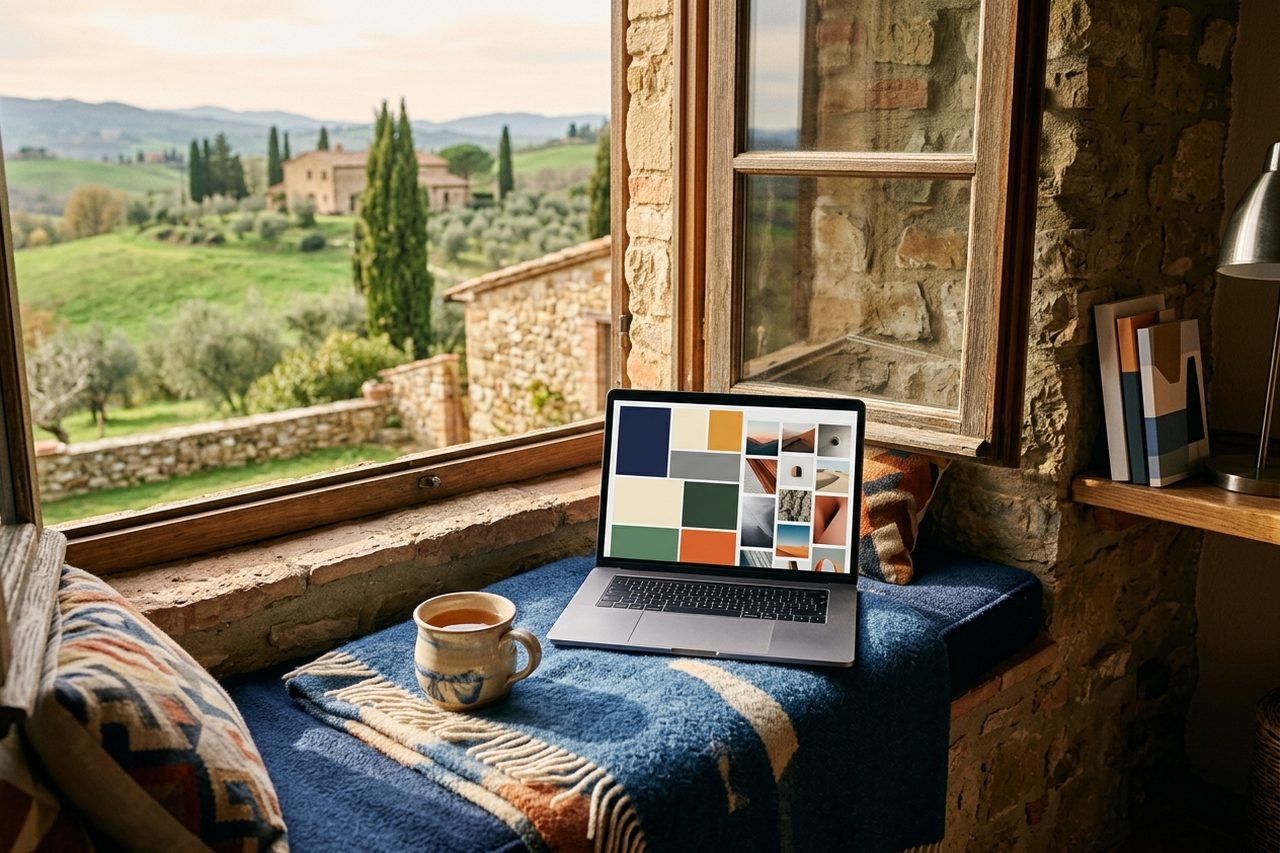
It is worth planning the photo session by moments of use: exteriors by season, interiors in natural light, the kitchen and living room as a place to gather, the views from the windows and activities in the setting. Each image should answer a guest's question: what is it like to wake up here, what can I do in the district, how do I arrive if I am driving at night?
Multi-language management if you receive international visitors
A multi-language rural house website is not only translating text: it is adapting calendars, policies, SEO entries and local content to the markets you care about. If you receive guests from Germany, France or the United Kingdom, a version in their language reduces friction and improves conversion. The recommended structure is a main domain with /en/, /fr/ or /de/ versions and hreflang tags so Google serves the right version.
An example of a multi-language structure
A home page in Spanish, /en/ for English, /fr/ for French, and destination pages by language that share the calendar and the prices. Each version has its own meta description and localised contact details.
It is also worth translating the booking engine and the automatic confirmation messages. There is no point attracting a guest in their language and then sending a confirmation in another.
Rules and registration of rural stays: what your website should show
Each autonomous community regulates the register of rural tourism accommodation with its own criteria: in some it is called tourist-use housing, in others a rural house, farm stay or rural tourism accommodation. Before you publish the site, confirm which register applies to you and which details you must show. There is no single rule for the whole of Spain.
On the website it is worth showing the registration or listing number, the authorised capacity and the owner's details when the rules require it. It is not only a legal matter: it also builds trust and reduces doubt at the booking stage. Check the current rules of your autonomous community before you accept online bookings.
A single rural house versus several stays: multi-property management on the website
A website for a single rural house is not the same as one for an owner with two or three rural stays, or a small group of them. In the second case, the site needs a multi-property system with calendars by unit, individual pages per house and a single payment gateway. It is a model closer to hotel web design than to a site for a single estate.
The point is that the guest can compare units without mixing up availability. The owner's panel should allow prices by season, minimum stay and cleaning to be adjusted. If you want an initial steer, contact our team to look at your specific case.
Choose the plan that fits your restaurant or other hospitality business
Three clear options, by the size and ambition of the business. They fit restaurants, pastry shops, bakeries, gourmet shops, food trucks, dark kitchens, catering, cooking schools and any other food business. Every plan includes a fully responsive design and direct support.
A basic site for a single rural house, with a gallery, contact and a professional presence.
A site for a rural house or rural stay with your own booking engine and local SEO.
A multi-language, multi-property site for owners who manage several rural houses.
Common questions about rural house web design: direct sales for your stay
What is Toprural called now?
Toprural was for years the reference portal for rural tourism in Spain and has passed through different owners and brand changes, so it is worth checking the current name on the portal itself before treating it as settled. For your strategy the name matters little: the portal is one more shop window. What does not change is that a direct booking from your own website is the only channel where you pay no commission and you keep the guest's details.
Which are the best portals to list my rural house?
It depends on the type of guest and the area. Generalist portals such as Booking or Airbnb and platforms specialised in rural tourism complement each other. Weigh commissions, real visibility, calendar quality and sync. None of them should be your only channel: your own website with direct booking is the base that lets you diversify without giving away the relationship with the guest or paying a commission on every booking.
Do I need my own website if I am already on Booking or Airbnb?
Yes. The portal gives you aggregated demand, but it does not hand you the brand, the relationship with the guest or the data for future campaigns. With your own website you can offer a fairer price with no commission, take direct bookings, rank for the district and tell the story of your setting. It is the difference between appearing in someone else's shop window and owning a digital asset that adds value to your stay.
How much does a rural house website cost?
At GastroSEO, the Essential Website costs 890 €, the Professional 1.490 € and the Premium 2.490 €, always as a one-off and delivered in 2–4 weeks. The price varies with the booking engine, the languages and the number of stays. A cheap template site can save money at the start, but you usually lose flexibility, SEO and independence.
What must a rural house website have?
An availability calendar, your own booking engine or a clear form, a photo gallery of the stay and the setting, a page of activities and how to get there, a visible tourism registration number, a cancellation policy, legal notice and privacy. If you receive foreign visitors, a multi-language version. And all of it has to work fast on a phone, which is where many rural stays are looked up and booked.
Do I need to register my rural house before I have my own website?
Each autonomous community requires its own register of rural tourism accommodation or tourist-use housing. The right order is to have the administrative situation clear before you publish rates and accept online bookings. Check the current rules in your community. The website should show the registration number when the rules require it, and it should build trust at the booking stage.
How do I get more direct bookings without paying a commission?
Treat the website as a channel: your own booking engine, a local SEO page for the district, an optimised Google Business Profile, reviews and content about the setting. Link the site from every profile and say on the portals that people can also book direct, on better terms. Offer flexibility on cancellation, or detail about the setting, so you stand apart and capture the direct contact.
Which app can I use to manage bookings for my rural house?
There are booking engines and PMS tools for rural stays with a calendar, portal sync and payments. On our sites we integrate our own engine for direct booking. The choice depends on the number of houses, the payment gateway and the sync with Booking or Airbnb. The aim is a single panel where you control availability and rates without depending on each platform separately.
Other GastroSEO services
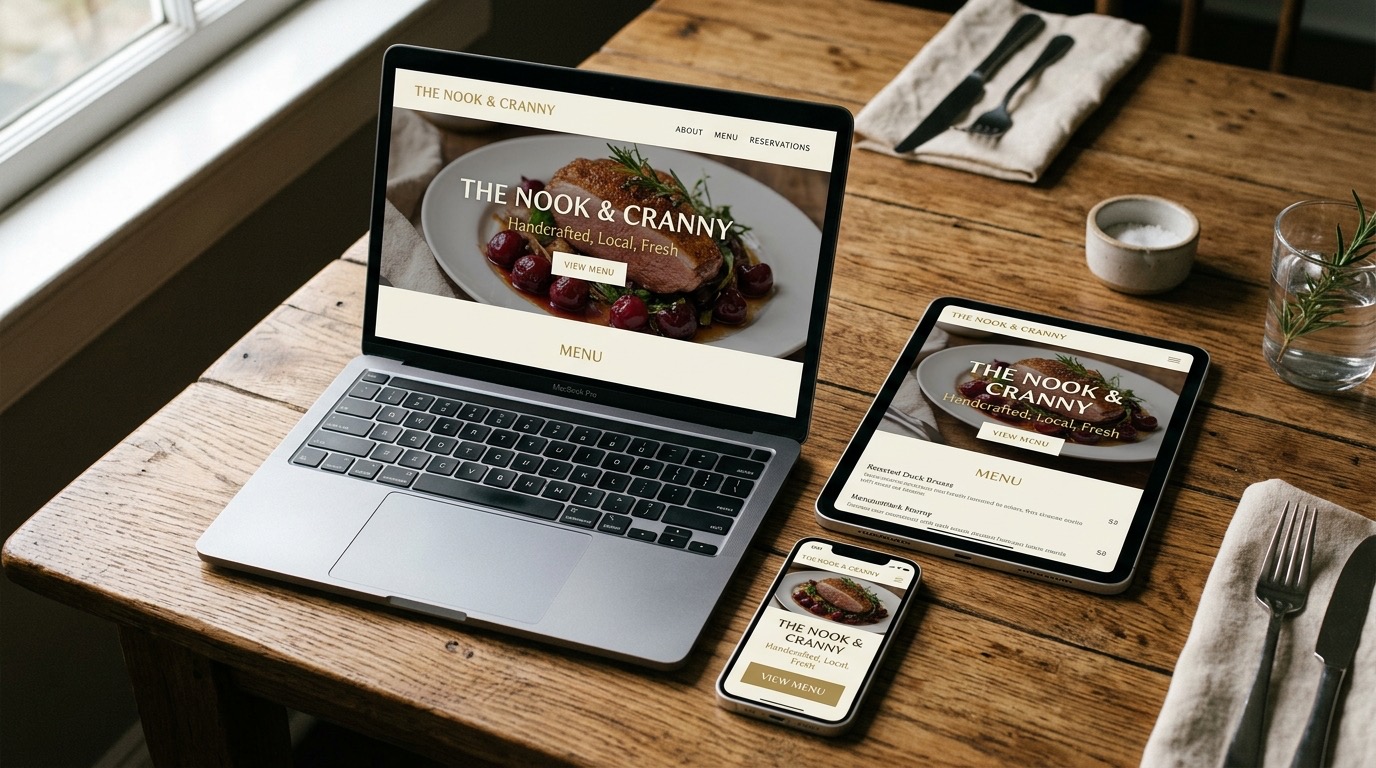
Web design and websites for restaurants and hospitality
Web design for restaurants, bars, hotels and hospitality businesses: fast sites with local SEO and online bookings. From...
See the service →
Website for cooking schools
Web design for cooking schools and culinary academies: a course catalogue, a place booking and local SEO. Three plans fr...
See the service →
Web design for bars and cafés: a fast site, a QR menu and local SEO
Web design for bars and cafés from 890 €, delivered in 2–4 weeks. A fast site, a QR digital menu, local SEO and a Google...
See the service →Interested in rural house web design: direct sales for your stay?
Book the Local SEO Audit Pro (290 €) and we prepare a proposal for your business. It is credited in full if you hire the GastroSEO plan within 30 days.