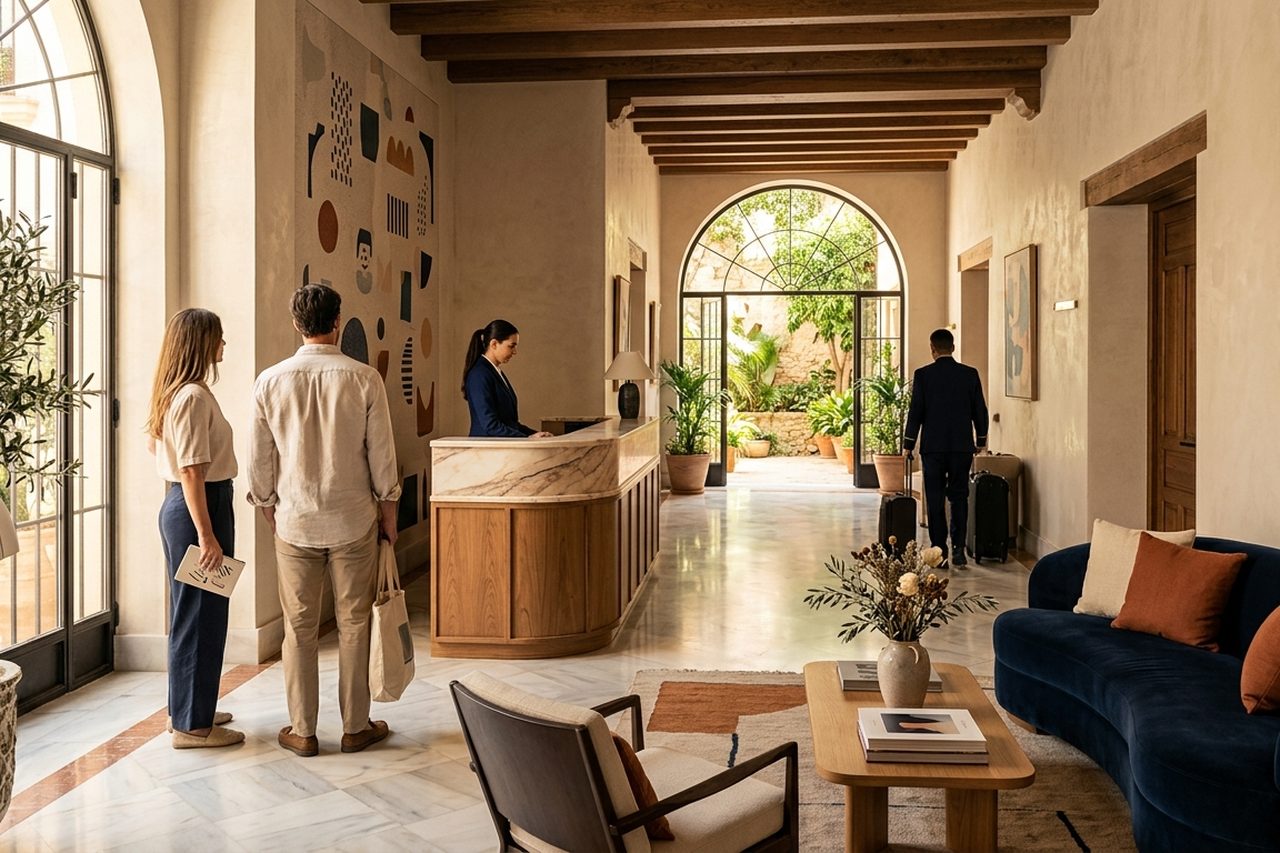
Hotel web design: direct sales and bookings without depending on OTAs
Hotel web design with an integrated booking engine and local SEO. From 1.290 €, delivered in 2–4 weeks. Reduce dependence on Booking and Expedia.
The real challenge of hotel web design: direct sales and bookings without depending on OTAs
We design hotel websites that put direct sales first: an integrated booking engine, photography that sells and local SEO so you show up on Google. The price starts at 1.290 € (one-off) and delivery is in 2–4 weeks. Built for city hotels, holiday hotels, rural hotels and small chains that want to reduce their dependence on Booking.com or Expedia.
What you get
An integrated booking engine to capture direct bookings without OTA commissions.
Responsive design: the site looks and books as well from a phone as from a desktop.
Professional photography of rooms and facilities as a conversion lever.
A multi-language structure to attract international guests.
Local SEO with Hotel schema and an optimised Google Business Profile.
Load speed and Core Web Vitals so you do not lose bookings to slowness.
How we work
The same method on every hospitality project. Clear milestones and a deliverable at each stage.
We gather your value proposition, photos, services and current booking engine.
We create the visual structure and the content, focused on conversion.
We connect your booking engine (SiteMinder, Cloudbeds and others) or advise you on choosing one.
We publish, check speed and basic SEO, and hand over the finished site.
Who this service is for
Why web design matters for a hotel: direct sales versus dependence on OTAs
A website of your own is the only channel where the hotel controls the brand, the relationship with the guest and the margin on each booking. Depending on OTAs such as Booking.com or Expedia means giving up visibility and paying a commission on every night sold, and competing in an environment where price ranks above the experience. Web design is not only looks: it is the tool that turns a search into a direct booking.
A hotel with its own site can show its value proposition, its real photos and its policies without a third-party filter. And it can build a guest database for future campaigns. You do not need exact percentages to understand the logic: every direct booking is margin that stays in the hotel, and a relationship that does not pass through an intermediary.
Essential elements of a hotel website that converts
A hotel website that converts has, at a minimum: a booking engine visible on every page, a clear value proposition, professional photos, a high load speed and a structure built for mobile. Without these five elements, the site is a digital brochure that does not generate business.
- An integrated booking engine with a "Book" button always visible.
- A gallery of real photos of rooms and facilities.
- Room descriptions with prices and availability.
- A contact and location page with an interactive map.
- Guest opinions and reviews, visible.
- Service information: parking, pool, breakfast, wifi.
- More than one language if there is international demand.
- Local content or a blog to support SEO.
The booking engine: what it is and how to choose one
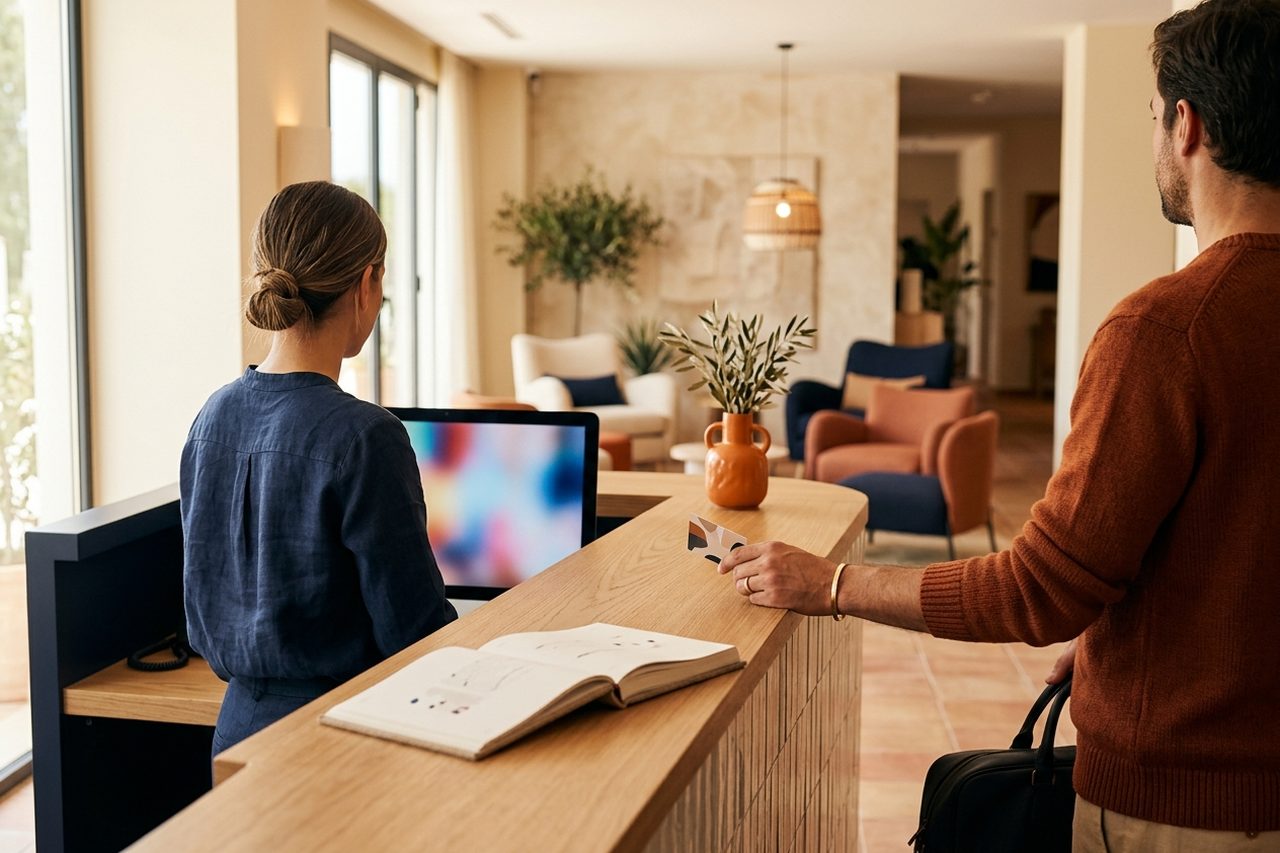
A booking engine is the software that lets the guest check availability, choose a room and pay directly on the hotel website, without going through an OTA. Choosing it well matters as much as the design: a slow or unreliable engine kills conversion. There are options integrated with a PMS and a channel manager that sync rates and availability in real time.
| Engine | Type of integration | Recommended hotel size | Main focus |
|---|---|---|---|
| SiteMinder | Channel manager + engine | Mid-size hotels and chains | Multi-channel distribution |
| Cloudbeds | PMS + engine + channel manager | Hotels and guesthouses of any size | All in one |
| Paraty Tech | Direct booking engine | Independent hotels and chains | Conversion optimisation |
| D-EDGE | Distribution suite + engine | Mid-size and large hotels | Centralised management |
| RoomRaccoon | PMS + engine | Boutique and small hotels | Ease of use |
There is no universal engine: the choice depends on your current PMS, the volume of bookings and whether you need a channel manager. Our job is to integrate the one you already use, or recommend options for your case, without tying you to any specific platform.
What hotel web design costs
The price of hotel web design varies a lot by agency, complexity and the number of integrations. At GastroSEO we offer three plans from 1.290 € to 2.890 €, all as a one-off and delivered in 2–4 weeks. A cheap template site can turn out expensive if it does not convert: the real cost is the bookings that never arrive.
If you also run a restaurant inside the hotel, you can see our web design for restaurants service to bring the property's digital presence together.
Local SEO for hotels: Google Business Profile, reviews and Hotel schema
Local SEO for hotels means optimising your presence on Google for searches such as "hotel in [city]" or "hotel near [place]". It includes the Google Business Profile, the reviews and Hotel schema markup on your site. Without this, your hotel is invisible to anyone looking for a place to stay in your area.
- Google Business Profile: a listing with photos, hours, a link to bookings and replies to reviews.
- Reviews: managing and replying to opinions affects the booking decision.
- Hotel/LodgingBusiness schema: structured data that describes the stay, its services and its location so Google understands what you are; the direct booking links in Google's panel are managed separately, from your listing and your engine.
You can hire our local SEO for hotels service or Google Business Profile management separately if you already have a website.
Common mistakes in hotel web design
The most frequent mistakes are: using generic stock photos, hiding the booking button, not adapting the site to mobile, ignoring load speed and not including clear information on prices and availability. Each of these failures costs direct bookings and pushes the guest toward an OTA.
- Low-quality or stock photos that do not reflect the real hotel.
- A booking engine on a secondary page, or one that is hard to see.
- Copy with no value proposition: it does not say why someone should choose you.
- No extra language for international guests.
- No SSL certificate (https), which creates distrust.
- Not measuring conversions: you do not know what works and what does not.
- A cluttered design that distracts from the aim of booking.
When a redesign is better than keeping the current site
A redesign is worth it when the current site does not generate direct bookings, does not pass the Core Web Vitals Google measures, does not look right on a phone or does not reflect the real image of the hotel. A redesign done well recovers the investment if it increases direct sales, but keeping an obsolete site is more expensive over time.
Clear signals: direct bookings that have stalled, a high bounce rate, an outdated design, trouble updating the content, no integration with the booking engine, or SEO penalties. If you recognise two or more, it is time to consider a change.
A hotel website by type of stay
The website of a city business hotel is not the same as that of a family holiday hotel or a boutique rural house. Each type needs a different approach in design, content and calls to action. Matching the site to the guest profile multiplies conversion.
City hotel
Prioritise location, business services and a fast booking. The booking button should be on the home page, and transport and wifi information is key.
Holiday hotel
Prioritise photos of the pool, activities and family offers. Wide galleries and experience packages work better than long text.
Rural or boutique hotel
Prioritise the experience, the setting and the story. Storytelling and detail photos sell more than the price. If your stay is a rural house, see our web design for rural houses service.
How to measure the return: direct bookings won versus commission saved
The return of a hotel website is measured by comparing the direct bookings you won with the commissions you would have paid the OTAs for those same bookings. What matters is measuring how many bookings come through the website and how many through portals, month by month.
To measure it, set up Google Analytics with booking events, use the reports from your booking engine and review it monthly. You also gain customer data and the chance to bring people back with your own campaigns, which the OTAs do not give you.
Conclusion: your website is your best direct-sales channel
A well-designed hotel website is not a cost. It is the investment that reduces your dependence on Booking.com and Expedia. With an integrated booking engine, real photos, speed and local SEO, each visit has a better chance of becoming a direct booking. If you want to talk about your case, contact us and we will advise you with no obligation.
Choose the plan that fits your restaurant or other hospitality business
Three clear options, by the size and ambition of the business. They fit restaurants, pastry shops, bakeries, gourmet shops, food trucks, dark kitchens, catering, cooking schools and any other food business. Every plan includes a fully responsive design and direct support.
For small hotels that need an online presence with basic bookings.
For hotels that want to maximise direct bookings with an optimised, multi-language design.
For hotels and small chains that want a complete site with local SEO and strategic content.
Common questions about hotel web design: direct sales and bookings without depending on OTAs
What is a booking engine for hotels?
It is software that sits on the hotel website and lets the guest check availability, choose a room, see the final price and pay online without going through an OTA. It usually connects to the PMS and the channel manager so rates and availability stay in sync in real time, which avoids overbookings.
What booking software is available for hotels?
There are several options on the market: SiteMinder, Cloudbeds, Paraty Tech, D-EDGE and RoomRaccoon are some of the best known. Each has a different focus: some are only a booking engine, others include a PMS and a channel manager. The choice depends on the size of the hotel and on the integrations you already use.
Which hotel systems are most used (PMS, channel manager)?
Among the most common are Cloudbeds (PMS + engine + channel manager, all in one), SiteMinder (channel manager with an engine) and RoomRaccoon (PMS for small hotels). Also D-EDGE for mid-size chains and Paraty Tech, which specialises in direct conversion. There is no single best one for everyone: it depends on how you operate.
How much does hotel web design cost?
At GastroSEO the prices run from 1.290 € to 2.890 € as a one-off, with delivery in 2–4 weeks. The final price depends on pages, languages and integrations. A cheap template site can turn out expensive if it does not generate direct bookings.
How do I reduce dependence on Booking.com with my own website?
The key is a website with an integrated booking engine, real photos, a clear value proposition and local SEO so you appear in searches for your area. That way you capture direct bookings without paying the OTA a commission. You should also work on the Google Business Profile and the reviews to win local visibility.
What must a hotel website have if it is going to convert?
A booking engine visible on every page, professional photos of rooms and facilities, a high load speed, a responsive design for mobile, and clear information on prices and availability. Without these five elements, the site does not convert and pushes the guest toward an OTA.
When is it worth redesigning my hotel website?
When the current site does not generate direct bookings, does not pass the Core Web Vitals Google measures, does not look right on a phone or does not reflect the real image of the hotel. Also if you struggle to update the content or it is not integrated with your booking engine. A redesign is only justified if it raises direct sales; that is why the first thing we look at is where your bookings come from today.
How does local SEO improve a hotel's direct bookings?
Local SEO makes your hotel appear in searches such as "hotel in [city]" or "hotel near [place]". By optimising the Google Business Profile, managing reviews and using Hotel schema on your site, Google shows your relevant information, and the direct booking links are managed separately, from your listing and your engine.
Other GastroSEO services
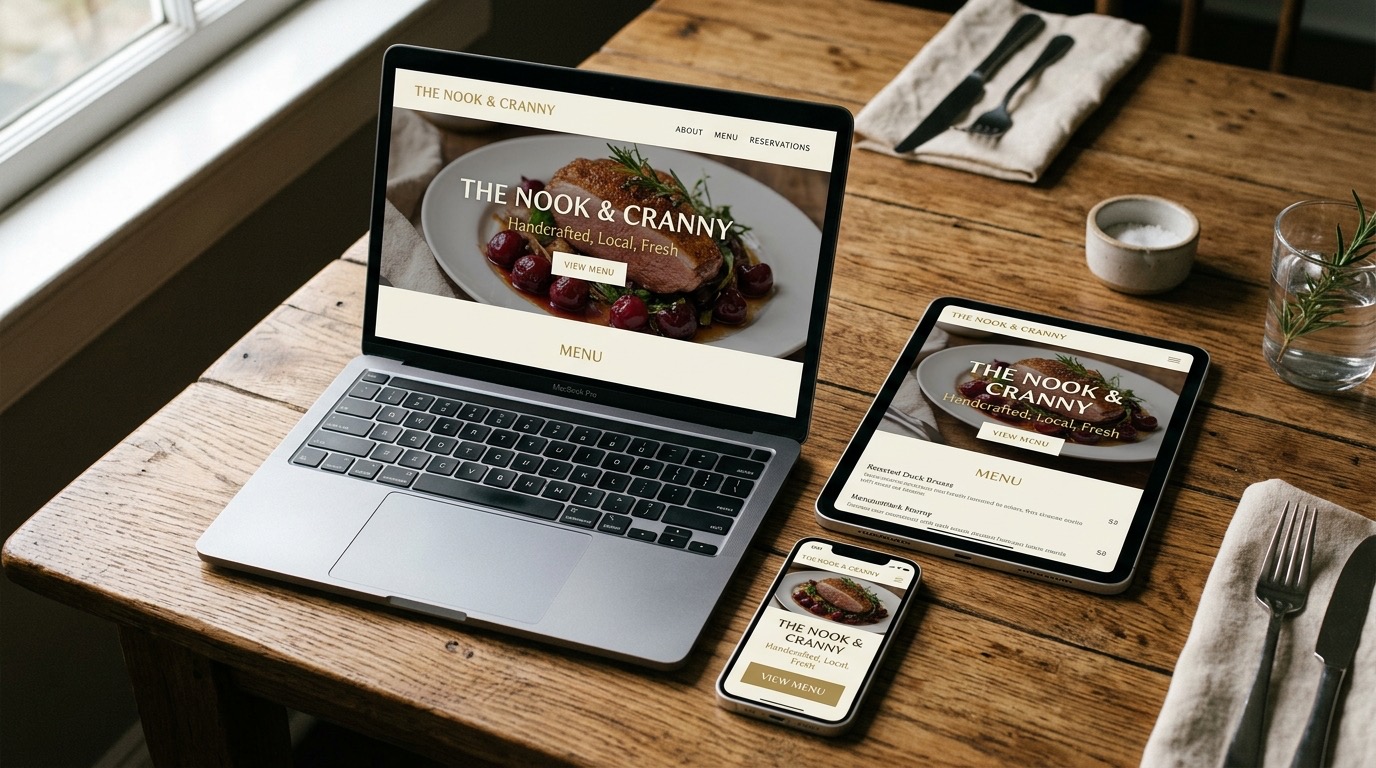
Web design and websites for restaurants and hospitality
Web design for restaurants, bars, hotels and hospitality businesses: fast sites with local SEO and online bookings. From...
See the service →
Website for cooking schools
Web design for cooking schools and culinary academies: a course catalogue, a place booking and local SEO. Three plans fr...
See the service →
Web design for bars and cafés: a fast site, a QR menu and local SEO
Web design for bars and cafés from 890 €, delivered in 2–4 weeks. A fast site, a QR digital menu, local SEO and a Google...
See the service →Interested in hotel web design: direct sales and bookings without depending on OTAs?
Book the Local SEO Audit Pro (290 €) and we prepare a proposal for your business. It is credited in full if you hire the GastroSEO plan within 30 days.